












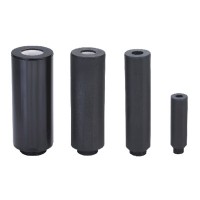


Vacuum Pick Up Cylinders for Automated Pick-and-Place Systems
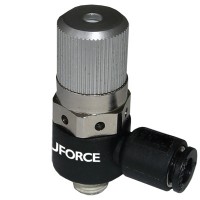
Vacuforce vacuum pick up cylinders combine vacuum gripping and short-stroke vertical movement in a single compact device. They are designed for automated handling applications where a product must be approached, gripped and lifted without using a separate pneumatic cylinder for the vertical motion.
Unlike conventional pick-and-place systems that require a pneumatic cylinder, directional valve, fittings, guides and separate vacuum gripping components, a vacuum cylinder uses the vacuum source itself to create the operating sequence. This can simplify machine design, reduce the number of components and provide fast, repeatable handling for lightweight products.
Vacuum pick up cylinders are commonly used in packaging machinery, paper handling, printing equipment, labeling systems, converting machinery and compact industrial automation.
Download Vacuum Cylinder Datasheet Download Vacuum Cylinder White PaperWhat Is a Vacuum Pick Up Cylinder?
A vacuum pick up cylinder is a self-actuating vacuum handling device that combines vertical movement with a suction cup connection. When vacuum is applied, the internal piston extends downward toward the product.
Once the suction cup contacts the workpiece and establishes a vacuum seal, the internal pressure changes within the cylinder. The internal spring then retracts the piston and lifts the product.
This operating principle allows both product contact and lifting motion to be achieved using the vacuum circuit, reducing the need for additional pneumatic motion components.
How Does a Vacuum Cylinder Work?
The operating sequence is simple and automatic:
- The cylinder begins in the retracted upper position.
- Vacuum is applied to the cylinder.
- The piston automatically extends downward toward the product.
- The vacuum cup contacts the product surface.
- A vacuum seal is established between the cup and the product.
- Pressure equalizes inside the cylinder.
- The internal spring retracts the piston and lifts the product.
- When vacuum is released, the product is deposited.

Key Advantages of Vacuum Pick Up Cylinders
- Reduced component count: Combines gripping and vertical motion in one device.
- Simple machine design: Can remove the need for a separate pneumatic cylinder and associated controls.
- Compact installation: Useful where machine space is limited.
- Fast response: Suitable for repetitive high-cycle pick-and-place applications.
- Automatic operation: Vacuum creates the extension and retraction sequence.
- Maintenance-free design: Routine lubrication is not required.
- Height compensation: The cylinder can accommodate small variations in product position within its available stroke.
Why Vacuum Cylinders Are Useful for Porous Products
Products such as paper, corrugated board and some lightweight packaging materials allow air to leak through or around the product surface. This can make vacuum handling more difficult because the vacuum source must continually compensate for leakage.
A vacuum pick up cylinder extends the suction cup directly toward the product before the lifting phase begins. This minimizes the internal vacuum volume between the cup and the vacuum source and helps the system establish product contact quickly.
The vacuum source must still provide sufficient airflow to compensate for any porosity in the product. Vacuum cylinder selection should therefore consider both the vacuum level and the available vacuum flow.
Typical Applications
- Paper sheet handling
- Labels and labeling machinery
- Printing equipment
- Packaging machinery
- Lightweight carton handling
- Converting equipment
- Small plastic components
- Automated feeding systems
- Compact pick-and-place machinery
- Robotic end-of-arm tooling
Selection Guidance
Selecting the correct vacuum cylinder requires consideration of the product weight, required travel, suction cup size, cycle speed and available vacuum supply.
- Stroke: Select enough travel to reach the product throughout normal positional variation.
- Product weight: Confirm that the suction cup provides sufficient holding force with an appropriate safety factor.
- Cup size: Match the suction cup diameter and style to the product surface and available contact area.
- Vacuum level: Ensure the vacuum source can generate the required vacuum level.
- Vacuum flow: Porous products require enough airflow to compensate for leakage.
- Cycle rate: Verify that the cylinder can complete the required motion within the machine cycle time.
- Product variation: Allow sufficient stroke to accommodate normal variations in product height.
- Mounting: Confirm that the cylinder can be installed without side-loading the piston.
Application Tip: Vacuum pick up cylinders are best suited to lightweight, short-stroke handling applications. For heavier loads, longer travel or applications requiring precise motion profiles, a separate pneumatic or servo axis may be more appropriate.
Vacuum Cylinder vs. Separate Pneumatic Axis
| Comparison | Vacuum Pick Up Cylinder | Separate Pneumatic Cylinder |
|---|---|---|
| Vertical Motion | Integrated into the vacuum device | Provided by a separate actuator |
| Vacuum Gripping | Integrated through the same component | Requires separate cup and vacuum circuit |
| Control Requirements | Vacuum automatically creates the operating sequence | Normally requires directional valves and machine control logic |
| Component Count | Low | Higher |
| Travel | Short-stroke applications | Available with substantially longer stroke lengths |
| Motion Control | Automatic vacuum-driven movement | Greater control over speed and positioning |
| Best Application | Fast lightweight pick-and-place | Longer travel, heavier loads or controlled motion |
Vacuum Source Requirements
The vacuum source must provide sufficient vacuum flow to actuate the cylinder and establish a secure seal at the suction cup. Depending on the application, vacuum may be generated using a compressed-air venturi ejector, vacuum pump or regenerative blower.
For smooth, non-porous products, the vacuum flow requirement may be relatively low. Paper, corrugated board and other porous products can require substantially more airflow because air continuously leaks through the material.
Vacuum source selection should therefore consider product porosity, suction cup size, tubing length, cycle time and the number of vacuum cylinders operating simultaneously.
Installation Considerations
- Mount the cylinder so the piston travels freely without side loading.
- Keep vacuum tubing as short and unrestricted as practical.
- Use suitably sized tubing to minimize vacuum response time.
- Install filtration where dust or debris may enter the vacuum circuit.
- Ensure the suction cup approaches the product squarely.
- Verify that sufficient stroke remains available for product-height variation.
- Confirm that the vacuum source has adequate flow for the required cycle speed.
Maintenance
Vacuforce vacuum pick up cylinders are designed for low-maintenance industrial operation and do not require routine lubrication.
The suction cup should be inspected periodically for wear, cuts, contamination or deformation. Vacuum tubing and fittings should also be checked for leakage, particularly if machine cycle time begins to increase or lifting reliability decreases.
Where dusty materials such as paper or corrugated board are handled, vacuum filters should be inspected regularly to maintain adequate airflow.
Vacuum Cylinder Application Video
This Vacuforce application video shows a vacuum cylinder being used for automated card sorting. The example demonstrates how short-stroke vertical motion and vacuum gripping can be combined in a compact automated pick-and-place process.
Why Use Vacuforce Vacuum Pick Up Cylinders?
Vacuum cylinders offer an elegant solution for applications that require a short vertical pickup motion followed by vacuum gripping. Integrating these functions into one device can simplify machine construction while reducing valves, cylinders, fittings and mechanical components.
For suitable lightweight applications, this can result in a compact, fast and reliable pick-and-place mechanism with fewer components to install and maintain.
Frequently Asked Questions
What is a vacuum pick up cylinder?
A vacuum pick up cylinder combines a suction cup connection with automatic short-stroke vertical movement. Vacuum causes the device to approach the product, establish a grip and retract to lift the load.
How does a vacuum pick up cylinder work?
When vacuum is applied, the piston extends toward the product. Once the suction cup seals against the product, internal pressure changes allow the spring mechanism to retract the piston and lift the load.
Does a vacuum cylinder require a separate pneumatic cylinder?
No. The principal advantage of the design is that the vertical pick motion and vacuum gripping function are combined into the same component.
Does it require a directional control valve?
A separate directional valve for vertical cylinder motion is generally not required because the vacuum itself creates the extension and lifting sequence. The overall machine still requires a method of switching the vacuum supply.
What products are suitable for vacuum pick up cylinders?
Typical applications include paper sheets, labels, cartons, lightweight packaging materials, small plastic parts and other lightweight products suited to short-stroke automated handling.
Are vacuum cylinders suitable for porous products?
They can work particularly well with porous products because the suction cup extends directly toward the product before lifting. However, the vacuum source must provide enough airflow to compensate for leakage through the material.
How do I choose the correct stroke?
Select enough travel to allow the suction cup to reach the product across the expected range of product-height variation while remaining within the cylinder's rated stroke.
What vacuum source can be used?
A suitably sized compressed-air venturi generator, vacuum pump or regenerative blower can be used. Selection depends on required vacuum level, airflow, product porosity and cycle rate.
Do vacuum pick up cylinders require lubrication?
No. They are designed for maintenance-free operation and do not require routine lubrication.
Are vacuum cylinders suitable for heavy loads?
They are primarily intended for lightweight pick-and-place applications. Heavy loads, long travel or applications requiring controlled acceleration may be better suited to a separate pneumatic or servo-driven axis.
Can a vacuum cylinder compensate for product-height variation?
Yes. The available cylinder stroke can accommodate a degree of product-height variation, provided the product remains within the operating travel of the cylinder.
What affects the cycle speed?
Cycle speed is influenced by vacuum flow, tubing size, tubing length, cylinder stroke, product leakage, suction cup size and the response time of the vacuum control system.
What maintenance is required?
Routine maintenance is minimal. Inspect the suction cup, tubing, fittings and vacuum filter periodically and replace components if they become worn, damaged or contaminated.
Can Vacuforce help select the correct vacuum cylinder?
Yes. Vacuforce can assist with selection based on product weight, surface material, required stroke, cycle time, suction cup size and available vacuum source.


Ships from Indianapolis, USA
Stock: 31
Ships from Indianapolis, USA
Please Call


Ships from Indianapolis, USA
Stock: 33
Ships from Indianapolis, USA
Please Call


Ships from Indianapolis, USA
Please Call