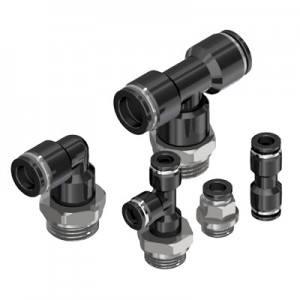
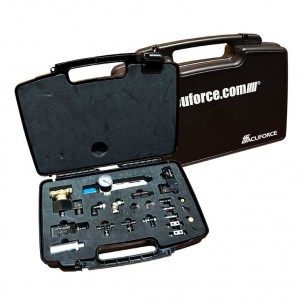
Push-to-Connect Pneumatic Fittings
Push-to-connect fittings, also known as push-in fittings, are the most commonly used tube connection components in modern pneumatic systems. They provide fast, reliable and leak-free connections between pneumatic tubing, valves, cylinders, FRLs, manifolds and other compressed air equipment without requiring special tools or assembly procedures.
Pneuforce supplies a complete range of industrial push-to-connect fittings in both inch and metric tube sizes. Designed for reliability and repeated use, these fittings feature stainless steel gripping claws with multi-point tube retention and a positive snap-action release mechanism. The result is a secure connection, excellent tube retention and the distinctive release feel that has made Pneuforce fittings popular throughout North American industry.
Download Pneumatic Fittings Datasheet PDF
What Is a Push-to-Connect Fitting?
A push-to-connect fitting is a pneumatic connector that allows tubing to be installed simply by pushing the tube into the fitting body. Internal stainless steel gripper teeth automatically lock onto the tubing while an elastomer seal creates a leak-free pneumatic connection.
To disconnect the tube, the release collar is pressed toward the fitting body, releasing the gripper mechanism and allowing the tube to be removed without damage. This design makes installation, maintenance and machine modification much faster than traditional compression fittings or threaded tube connections.
How Do Push-In Pneumatic Fittings Work?
When pneumatic tubing is inserted into the fitting, it passes through a release collar and stainless steel gripping mechanism before sealing against an internal O-ring. The gripper teeth hold the tubing securely under pressure while the seal prevents air leakage.
As system pressure increases, the grip remains secure, allowing the fitting to withstand normal pneumatic operating pressures while maintaining reliable performance through repeated connection and disconnection cycles.
Why Choose Pneuforce Push-to-Connect Fittings?
- Superior Tube Grip: Multipoint stainless steel gripping claws provide reliable tube retention.
- Excellent Reusability: Tubing can be connected and disconnected multiple times without damage.
- Multiple Thread Options: NPT, BSPP, BSPT and Universal thread designs available.
- Metric and Inch Sizes: Compatible with both metric and imperial pneumatic tubing.
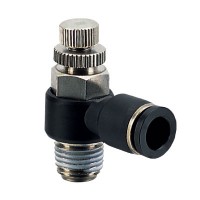
- Wide Product Selection: Straight, elbow, tee, branch, bulkhead, flow control and specialty fittings available.
- Industrial Quality: Designed for machine builders, OEMs and industrial maintenance applications.
- RoHS Compliant: Manufactured in accordance with RoHS environmental standards.
- Stocked in Indianapolis: Fast availability and technical support from Pneuforce.
Understanding Pneumatic Thread Types
One of the most common causes of pneumatic fitting leakage is selecting the wrong thread type. Pneuforce offers fittings with NPT, BSPP, BSPT and Universal thread configurations to simplify inventory management and ensure compatibility with international equipment.
- NPT: National Pipe Taper thread commonly used in North America.
- BSPP: British Standard Pipe Parallel thread requiring a sealing washer or O-ring.
- BSPT: British Standard Pipe Taper thread commonly used internationally.
- Universal Thread: Designed to accommodate multiple female thread standards and reduce inventory requirements.
Common Applications for Push-to-Connect Fittings
- Pneumatic cylinders
- Directional control valves
- Filter regulator lubricator assemblies
- Packaging machinery
- Industrial automation systems
- Robotic equipment
- Compressed air distribution systems
- Machine building and OEM equipment
- Vacuum automation systems
- Maintenance and retrofit projects
Why Fitting Quality Matters
Poor-quality fittings are a common source of pneumatic leaks, downtime and maintenance issues. A leaking fitting not only wastes compressed air but can also reduce machine performance and increase operating costs. High-quality push-in fittings provide consistent sealing performance, longer service life and easier maintenance throughout the life of the machine.
Pneuforce fittings are designed to deliver long-term reliability, easy installation and dependable pneumatic connections in demanding industrial environments.
Technical Resources
Watch Fittings Video
Watch Pipe Threads Explained
Frequently Asked Questions
What is a push-to-connect fitting?
A push-to-connect fitting is a pneumatic connector that allows tubing to be inserted by simply pushing the tube into the fitting. Internal gripper teeth secure the tube while an internal seal prevents air leakage.
Are push-in fittings reusable?
Yes. Quality push-to-connect fittings can be connected and disconnected multiple times without damaging the tubing or reducing sealing performance when used correctly.
What tubing can be used with push-to-connect fittings?
Push-to-connect fittings are commonly used with polyurethane, nylon, polyethylene and other pneumatic tubing materials in both inch and metric sizes.
What is the difference between NPT and BSP threads?
NPT is a North American tapered pipe thread standard, while BSP threads are commonly used internationally. BSP is available in both parallel (BSPP) and tapered (BSPT) versions.
What are universal thread pneumatic fittings?
Universal thread fittings are designed to connect with multiple female thread standards, reducing inventory requirements and simplifying pneumatic system maintenance.
Can push-to-connect fittings be used for vacuum applications?
Yes. Many push-in fittings are suitable for vacuum service as well as compressed air applications, provided the fitting is rated for the required vacuum level.
Why do pneumatic fittings leak?
Leaks are often caused by incorrect thread selection, damaged or even oval tubing, improper installation, contamination, over-tightening or using low-quality fittings.
How do I choose the correct push-to-connect fitting?
Select a fitting based on tubing outside diameter, thread type, operating pressure, flow requirements, installation space and application environment.

 .pf-pneumatic-components-category{width:100%;font-family:Arial,Helvetica,sa..
 .pf-zh-venturi-category{ width:100%; font-family:Arial,Helvetica,sans-s..
 .vf-red-category{width:100%;font-family:Arial,Helvetica,sans-serif;line-hei..
 .vf-red-category{width:100%;font-family:Arial,Helvetica,sans-serif;line-hei..
 .vf-red-category{width:100%;font-family:Arial,Helvetica,sans-serif;line-hei..
 .vf-red-category{width:100%;font-family:Arial,Helvetica,sans-serif;line-hei..
 .pf-vtm-venturi-category{ width:100%; font-family:Arial,Helvetica,sans-..
 .pf-venturi-cartridge-category{ width:100%; font-family:Arial,Helvetica..
 .pf-pneumatic-components-category{width:100%;font-family:Arial,Helvetica,sa..
 .pf-cv-venturi-category{ width:100%; font-family:Arial,Helvetica,sans-s..
 .pf-vfmc-category{ width:100%; font-family:Arial,Helvetica,sans-serif; ..
 .vf-red-category{width:100%;font-family:Arial,Helvetica,sans-serif;line-hei..
 .vf-red-category{width:100%;font-family:Arial,Helvetica,sans-serif;line-hei..
 .vf-red-category{width:100%;font-family:Arial,Helvetica,sans-serif;line-hei..
 .vf-red-category{width:100%;font-family:Arial,Helvetica,sans-serif;line-hei..
 .pf-vabs-venturi-category{ width:100%; font-family:Arial,Helvetica,sans..
 .vf-red-category{width:100%;font-family:Arial,Helvetica,sans-serif;line-hei..
 .vf-red-category{width:100%;font-family:Arial,Helvetica,sans-serif;line-hei..
 .vf-red-category{width:100%;font-family:Arial,Helvetica,sans-serif;line-hei..
 .vf-red-category{width:100%;font-family:Arial,Helvetica,sans-serif;line-hei..
 .pf-bellows-cups-category{ width:100%; font-family:Arial,Helvetica,sans..
 .pf-flat-cups-category{ width:100%; font-family:Arial,Helvetica,sans-se..
 .vf-red-category{width:100%;font-family:Arial,Helvetica,sans-serif;line-hei..
 .pf-heavy-duty-cups-category{ width:100%; font-family:Arial,Helvetica,s..
 .pf-conductive-silicone-suction-cups-category{ font-family:Arial,Helvetic..
 .vf-red-category{width:100%;font-family:Arial,Helvetica,sans-serif;line-hei..
 .vf-red-category{width:100%;font-family:Arial,Helvetica,sans-serif;line-hei..
 .pf-foam-seal-cups-category{ width:100%; font-family:Arial,Helvetica,sa..
 .vf-red-category{width:100%;font-family:Arial,Helvetica,sans-serif;line-hei..
 .pf-pneumatic-components-category{width:100%;font-family:Arial,Helvetica,sa..
 .pf-pneumatic-components-category{width:100%;font-family:Arial,Helvetica,sa..
 .pf-pneumatic-components-category{width:100%;font-family:Arial,Helvetica,sa..
 .pf-pneumatic-components-category{width:100%;font-family:Arial,Helvetica,sa..
 .pf-pneumatic-components-category{width:100%;font-family:Arial,Helvetica,sa..
 .pf-pneumatic-components-category{width:100%;font-family:Arial,Helvetica,sa..
 .pf-pneumatic-components-category{width:100%;font-family:Arial,Helvetica,sa..
 .vf-red-category{width:100%;font-family:Arial,Helvetica,sans-serif;line-hei..
 .pf-vacuum-filter-disks-category{ font-family:Arial,Helvetica,sans-serif; c..
 .pf-inline-vacuum-filters-category{ font-family:Arial,Helvetica,sans-serif;..
 .vf-product-category{ font-family:Arial,Helvetica,sans-serif; color:#33..
 .pf-vacuum-bowl-filters-category{ font-family:Arial,Helvetica,sans-serif; c..
 .vf-red-category{width:100%;font-family:Arial,Helvetica,sans-serif;line-hei..
 .pf-blue-category{width:100%;font-family:Arial,Helvetica,sans-serif;color:#..
 .pf-solenoid-poppet-valves-category{ font-family:Arial,Helvetica,sans-serif..
 .pf-full-port-vacuum-valves-category{ font-family:Arial,Helvetica,sans-seri..
 .pf-barracuda-gripper{ font-family:Arial,Helvetica,sans-serif; font-size:16..
 .vf-red-category{width:100%;font-family:Arial,Helvetica,sans-serif;line-hei..
 Vacuum Grippers for Robotic Pick and Place Automation Vacuforce vacuum gr..
 .vf-red-category{width:100%;font-family:Arial,Helvetica,sans-serif;line-hei..
 .pf-plastic-push-to-connect-fittings-category{ font-family:Arial,Helvetic..
 .pf-stainless-pushin-category{ font-family:Arial,Helvetica,sans-serif; ..
 .pf-metal-push-in-fittings-category{ font-family:Arial,Helvetica,sans-serif..
 .pf-flow-control-category{ font-family:Arial,Helvetica,sans-serif; colo..
 ..
.. .pf-blue-category{width:100%;font-family:Arial,Helvetica,sans-serif;color:#..
 .pf-pneumatic-components-category{width:100%;font-family:Arial,Helvetica,sa..
 .pf-pneumatic-components-category{width:100%;font-family:Arial,Helvetica,sa..
 .pf-blue-category{width:100%;font-family:Arial,Helvetica,sans-serif;color:#..
 .pf-blue-category{width:100%;font-family:Arial,Helvetica,sans-serif;color:#..
 .pf-blue-category{width:100%;font-family:Arial,Helvetica,sans-serif;color:#..
 .pf-air-filter-category{ font-family:Arial,Helvetica,sans-serif; color:..
 .pf-pressure-regulator-category{ font-family:Arial,Helvetica,sans-serif; ..
 .pf-air-lubricator-category{ font-family:Arial,Helvetica,sans-serif; co..
 .pf-filter-regulator-category{ font-family:Arial,Helvetica,sans-serif; ..
 .pf-pneumatic-components-category{width:100%;font-family:Arial,Helvetica,sa..
 .pf-blue-category{width:100%;font-family:Arial,Helvetica,sans-serif;color:#..
 .pf-air-pilot-valve-category{ font-family:Arial,Helvetica,sans-serif; c..
 .pf-brass-solenoid-category{ width:100%; font-family:Arial,Helvetica,sa..
 .pf-stainless-solenoid-category{ font-family:Arial,Helvetica,sans-serif; ..
 .pf-pneumatic-components-category{width:100%;font-family:Arial,Helvetica,sa..
 .pf-blue-category{width:100%;font-family:Arial,Helvetica,sans-serif;color:#..
 .pf-manual-valves-category{ font-family:Arial,Helvetica,sans-serif; col..
 .pf-automatic-valves-category{width:100%;font-family:Arial,Helvetica,sans-s..
 .pf-blue-category{width:100%;font-family:Arial,Helvetica,sans-serif;color:#..
 .pf-blue-category{width:100%;font-family:Arial,Helvetica,sans-serif;color:#..
 .pf-blue-category{width:100%;font-family:Arial,Helvetica,sans-serif;color:#..
 .pf-pneumatic-components-category{width:100%;font-family:Arial,Helvetica,sa..
 .pf-blue-category{width:100%;font-family:Arial,Helvetica,sans-serif;color:#..
 .pf-blue-category{width:100%;font-family:Arial,Helvetica,sans-serif;color:#..
 .pf-pneumatic-components-category{width:100%;font-family:Arial,Helvetica,sa..
 .pf-pneumatic-components-category{width:100%;font-family:Arial,Helvetica,sa..
 .pf-blue-category{width:100%;font-family:Arial,Helvetica,sans-serif;color:#..
 .pf-pneumatic-components-category{width:100%;font-family:Arial,Helvetica,sa..