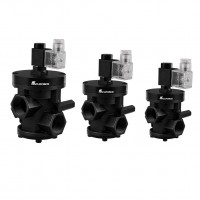
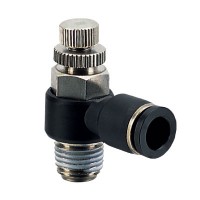
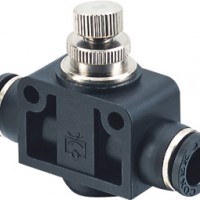
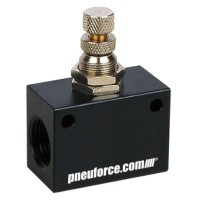
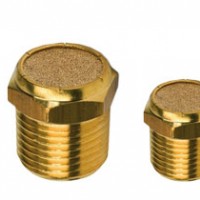
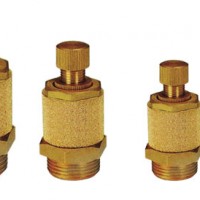
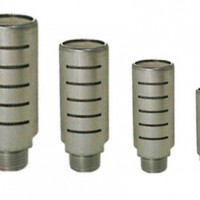
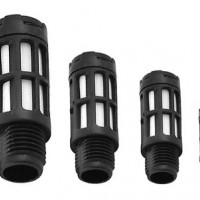
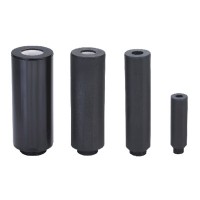
Brass Silencer Throttles
Brass Silencer Throttles help manage pneumatic exhaust air, reduce noise and protect open ports in compressed-air and vacuum equipment. Pneuforce offers durable options for a wide range of industrial installations.
Noise Reduction
Helps reduce pneumatic exhaust noise at valves and equipment ports.
Compact Installation
Threaded designs install directly into compatible exhaust or breather ports.
Industrial Construction
Materials are selected for dependable service in pneumatic environments.
Multiple Styles
Choose the silencer, breather or throttle design that suits the application.
Product Overview
Silencer Throttles for Pneumatic Exhaust Flow Control
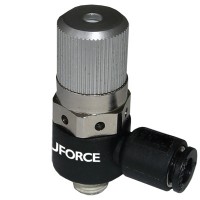
Pneuforce brass silencer throttles combine two pneumatic functions in a single compact component by providing both exhaust noise reduction and adjustable airflow control. Installed directly into the exhaust port of pneumatic valves, these silencer throttles allow machine builders and maintenance technicians to accurately control actuator speed while simultaneously reducing compressed air exhaust noise.
Silencer throttles are commonly used in pneumatic cylinder circuits, industrial automation systems, packaging machinery, robotics and OEM equipment where smooth actuator movement, repeatable cycle times and quieter machine operation are important.
Download Pneuforce Silencer Throttle Datasheet Silencer Throttle Features
- Combines an exhaust silencer with adjustable flow control
- Brass body with durable construction
- Reduces compressed air exhaust noise
- Allows precise adjustment of exhaust airflow
- Provides accurate actuator speed control
- Compact threaded installation
- Simple manual flow adjustment
- Suitable for industrial pneumatic systems
What Is a Silencer Throttle?
A silencer throttle is a pneumatic exhaust accessory that combines a sintered bronze exhaust silencer with an adjustable flow restriction. By controlling the rate at which compressed air leaves the actuator, the device regulates cylinder speed while also reducing exhaust noise.
This dual-purpose design eliminates the need to install a separate exhaust silencer and flow control, simplifying pneumatic system design and reducing the number of components required.
How Exhaust Flow Controls Cylinder Speed
In many pneumatic applications, actuator speed is controlled using the meter-out principle. Rather than restricting the incoming compressed air, airflow leaving the cylinder is restricted through the exhaust port. This provides smoother motion, improved stability and better speed control, particularly on double-acting pneumatic cylinders.
Silencer throttles are ideal for these applications because they combine adjustable meter-out flow control with effective exhaust noise reduction.
Benefits of Silencer Throttles
- Controls pneumatic cylinder speed
- Reduces compressed air exhaust noise
- Provides smooth actuator movement
- Improves machine repeatability
- Reduces the number of pneumatic components
- Simple installation and adjustment
- Suitable for new equipment and retrofit projects
Common Applications
- Pneumatic Cylinders: Meter-out speed control for retract and extend strokes.
- Directional Control Valves: Adjustable exhaust flow from valve ports.
- Packaging Machinery: Smooth actuator motion and quieter machine operation.
- Industrial Automation: Pneumatic positioning and controlled movement.
- Robotics: Controlled pneumatic gripper and actuator movement.
- OEM Equipment: Compact exhaust flow control solutions.
Choosing the Correct Silencer Throttle
Select the correct silencer throttle based on the exhaust port thread size, required airflow, cylinder speed and operating pressure. Correct sizing ensures accurate flow adjustment while maintaining efficient pneumatic performance and effective noise reduction.
Why Choose Pneuforce Brass Silencer Throttles?
Pneuforce provides dependable industrial pneumatic products supported by practical application assistance. Our team can help confirm sizing, connection, material and operating requirements for new equipment, replacement parts and system upgrades.