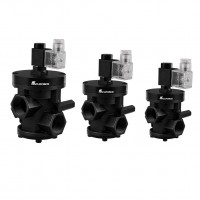
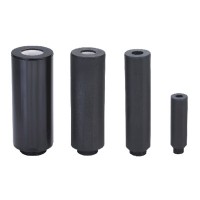
Energy Saving Kits
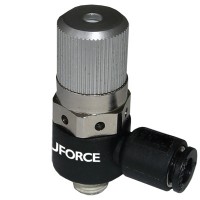
Energy Saving Kits are designed for industrial vacuum and pneumatic automation applications. The ESK models offer an energy savings kit for the AM vacuum venturi. Using a pneumatic vacuum switch this kit can turn the venturi on and off depending on vacuum system demand.
Vacuforce supports machine builders, integrators and maintenance teams with application-focused vacuum and pneumatic components for industrial automation.
Download Technical Datasheet PDFWhat Are Energy Saving Kits?
A vacuum energy saving kit monitors the vacuum level and controls compressed air to the vacuum generator so air consumption can be reduced once the required vacuum has been reached. The system restarts vacuum generation as needed to maintain the selected holding level.
Key Features
- Reduces continuous compressed air consumption in suitable applications
- Automatic vacuum monitoring and control
- Useful with compatible venturi vacuum systems
- Maintains vacuum by cycling the generator as required
- Most effective on sealed or relatively low-leakage loads
Typical Applications
- Robotic pick and place
- Sheet handling
- Packaging machinery
- Non-porous product handling
- Vacuum fixture systems
- Energy-reduction projects
Selection Guidance
Energy-saving systems work best where the product and vacuum circuit hold vacuum with limited leakage. Highly porous products or applications with continuous leakage may require the venturi to run continuously and therefore provide less opportunity for air savings.
Application Tip: Final selection should be based on the actual product, machine cycle, operating environment and required pneumatic or vacuum performance. Confirm model-specific ratings before installation.
Continuous Vacuum vs. Energy-Saving Control
Continuous systems supply compressed air to the venturi throughout the hold cycle. Energy-saving control switches the air supply according to vacuum demand, reducing runtime when the system can hold vacuum efficiently.
Why Use This Product Family?
A vacuum energy saving kit monitors the vacuum level and controls compressed air to the vacuum generator so air consumption can be reduced once the required vacuum has been reached. The system restarts vacuum generation as needed to maintain the selected holding level. Selecting the correct configuration can simplify machine integration, improve serviceability and provide more consistent application performance.
Frequently Asked Questions
How does a vacuum energy saver reduce air use?
It turns off or reduces compressed air to the vacuum generator after the required vacuum is reached and restarts it when vacuum falls.
Which applications benefit most?
Sealed, non-porous products and low-leakage vacuum circuits generally provide the greatest savings.
Will it work on porous products?
Savings may be limited because continuous leakage can require the venturi to operate frequently or continuously.
Does the kit create vacuum by itself?
No. It controls a compatible vacuum generator and monitors the vacuum condition.
Can it be retrofitted?
Many systems can be upgraded, but compatibility with the existing generator, valve and controls should be confirmed.
Does it affect holding safety?
The control strategy should maintain the required vacuum level, and the complete application must still be designed with suitable safety factors and fail-safe considerations.