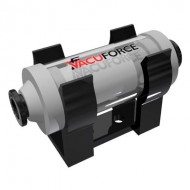










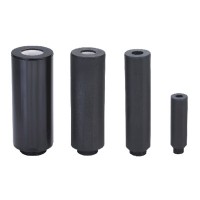


VC50 Vacuum Cylinder - 50mm Stroke, Non-rotating Piston
The Vacuforce VC50 vacuum cylinder combines vacuum gripping and vertical Z-axis movement in one compact component for automated pick-and-place machinery. When vacuum is applied, the piston extends toward the product, the suction cup seals, and the internal spring retracts the piston to lift the load.
With a maximum stroke of 50mm and a non-rotating piston, this model is designed for fixed orientation while reducing the need for a separate pneumatic cylinder, directional valve and associated motion controls.
Technical Specifications
| Specification | Details |
|---|---|
| Part Number | VC50 |
| Product Type | Vacuum lifting cylinder |
| Maximum Stroke | 50mm |
| Piston Style | Non-rotating |
| Extension Method | Vacuum-powered piston extension |
| Return / Lift Method | Internal spring retraction after the suction cup seals |
| Release Method | Vacuum off |
| Primary Function | Integrated vacuum gripping and Z-axis pick-and-place motion |
| Typical Applications | Packaging, paper handling, carton handling, labeling, printing and lightweight automation |
| Maintenance | No routine lubrication required |
How the VC50 Vacuum Cylinder Works
The VC50 begins in the retracted position. When vacuum is applied, the piston automatically extends downward through any distance up to its 50mm maximum stroke. The suction cup contacts the product and establishes a vacuum seal. Once the internal pressure equalizes, the spring retracts the piston and lifts the product from the point where the cup sealed.

Why Use the VC50 Vacuum Cylinder?
The VC50 replaces a conventional combination of pneumatic cylinder, suction cup, directional valve and separate motion control with a single vacuum-powered device. This can reduce component count, simplify installation and create a compact pick head for machines where straightforward vertical motion is required.
- Integrated Z-axis motion: Vacuum provides both product gripping and automatic piston extension.
- Automatic lift: The internal spring retracts the piston once the cup seals.
- Compact installation: Useful where machine space is limited.
- Simpler controls: No separate cylinder valve or programmed extend/retract sequence is normally required.
- Variable pickup height: The cup can seal at any point within the available 50mm stroke.
- Non-rotating piston: Designed for maintaining a consistent suction cup and product orientation throughout the longer pick stroke.
Selecting the Correct Piston Style
Choose the VC50 when suction cup and product orientation must remain fixed during the pick cycle. If rotational freedom is preferred, select the VC50R rotating model instead.
| Model | Piston Style | Best Selection When |
|---|---|---|
| VC50 | Non-rotating | Maintaining a consistent suction cup and product orientation throughout the longer pick stroke |
| VC50R | Rotating | The cup or product may need rotational freedom |
Typical Applications
- Automated paper sheet handling
- Corrugated carton and blank handling
- Labeling and printing machinery
- Packaging and converting equipment
- Lightweight plastic component handling
- Compact robotic end-of-arm tooling
- Machine loading and unloading
- Pick-and-place systems with variable product heights
Applications with Porous Products
Vacuum cylinders can be advantageous when handling paper, corrugated board and other products that allow some vacuum leakage. The piston extends the suction cup directly to the product before lifting, reducing unnecessary evacuated volume compared with some conventional arrangements. Final performance still depends on suction cup selection, vacuum flow, leakage and product surface condition.
Important: The vacuum cylinder provides vertical movement but does not determine the safe lifting capacity by itself. Select the suction cup and vacuum source for the product weight, surface, leakage, acceleration and orientation, and apply an appropriate engineering safety factor.
Installation and Application Considerations
- Confirm that the available 50mm stroke reaches the lowest expected pickup position.
- Allow clearance for the piston, suction cup and handled product throughout the complete cycle.
- Use a vacuum source with sufficient vacuum level and flow for the selected suction cup and product porosity.
- Keep vacuum tubing short and correctly sized to support fast response.
- Choose a suction cup that matches the product surface, shape and required holding force.
- For side loading, high acceleration or heavy parts, verify suitability through application testing.
Frequently Asked Questions
 (this file will open in a new browser tab)
ADVANTAGES
- No additional controls are required
- Short cycle times compared to traditional pick and place
- Short cycle times means less leakage on porous product handling
- Maintenance and lubrication free
Ships from Indianapolis, USA
- Stock: 33