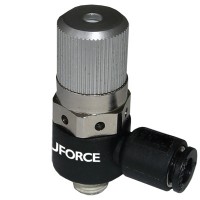
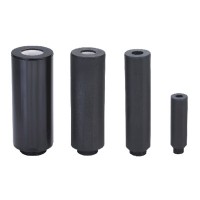
30mm Diameter Flat Suction Cup G1/4 Male Thread 45 Shore A
This Vacuforce suction cup is designed for industrial vacuum pick-and-place applications where reliable sealing, repeatable gripping and appropriate cup geometry are important.
Technical Specifications
| HTS Code | 4016.99.6050 |
Selection & Application Guidance
Select suction cups according to product shape, surface condition, material, cup geometry, acceleration, orientation and available vacuum. Theoretical holding force should always be reduced by an appropriate engineering safety factor before determining the working load.
Product Features & Existing Technical Details
- Automotive steel stamping
- Temperature Range -40C to +120C / -40F to +248F
- Glass handling
- Plywood transfer
- Handling of oily steel surfaces
- Concave and convex surfaces
- Large box & carton handling
Typical Applications
- Industrial vacuum pick-and-place
- Packaging and material handling
- Machine automation and robotic end-of-arm tooling
Important: Product suitability depends on the actual operating conditions. Confirm dimensions, connections, material compatibility, vacuum or pressure requirements, cycle conditions and any required safety factor before final machine integration.
Estimated Lifting Force at 24"Hg
Theoretical lifting force is calculated from the cup's nominal sealing area at approximately 80% vacuum. At sea level, 80% vacuum corresponds to approximately 11.76 PSI differential pressure.
Lifting Force Calculation
| Calculation Step | Metric | Imperial |
|---|---|---|
| Nominal Area | π × (1.5cm radius)² = 7.1cm² | π × (0.591in radius)² = 1.1in² |
| Vacuum Level | 80% vacuum | 24"Hg / 11.76 PSI differential |
| Estimated Theoretical Lift | 7.1 × 0.8 = 5.7kg | 1.1 × 11.76 = 12.9lb |
Important: Lifting force is theoretical and must not be used as the final working load without an appropriate engineering safety factor. Actual holding force depends on vacuum level, surface condition, porosity, cup orientation, acceleration, leakage and dynamic loading.
Frequently Asked Questions
What should I consider when selecting this suction cup?+
Consider cup geometry, product shape, surface condition, material, vacuum level, acceleration, orientation and required safety factor.
Is the listed lifting force the safe working load?+
No. Any theoretical lifting-force value must be reduced using an appropriate engineering safety factor and validated under actual application conditions.
Can this cup be used on porous materials?+
Performance on porous materials depends on leakage and available vacuum flow. Application testing may be required, and a higher-flow vacuum source or a different handling method may be more appropriate.
How should I confirm material compatibility?+
Confirm the cup compound against product temperature, surface finish, chemical exposure and any marking or contamination restrictions.
Ships from Indianapolis, USA
- Stock: Please Call
