Menu
Your Cart

VFB20N

VFB20N
VFB20N
VFB20N
VFB20N
VFB20N
VFB20N
VFB20N

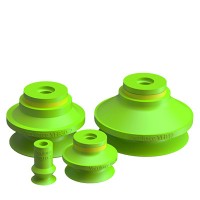
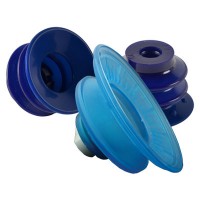
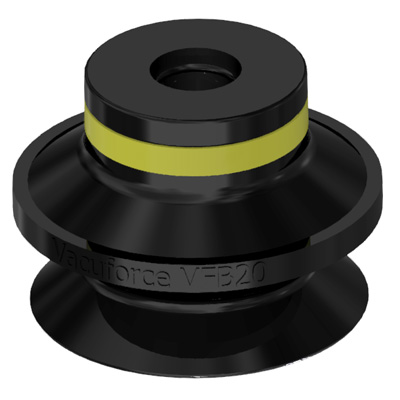
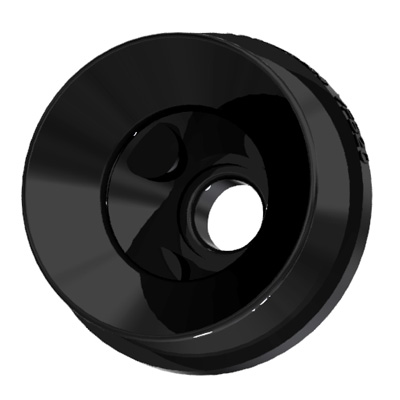
22mm Single Bellows NBR Nitrile Rubber Vacuum Suction Cup

This Pneuforce vacuum suction cup is designed for reliable industrial pick-and-place handling where consistent sealing, repeatable vacuum grip and fast replacement are important. The single bellows design helps match the cup to the application, while the NBR Nitrile Rubber compound supports the required operating environment.

This page includes calculated theoretical lifting force at 24"Hg / 80% vacuum using both metric and imperial engineering methods.

22mmCup Diameter
3.0kgLift at 24"Hg
6.9lbLift at 80% Vacuum
NBR Nitrile RubberMaterial

Technical Specifications

SpecificationDetails
Cup Diameter22mm / 0.866"
Cup StyleSingle Bellows
MaterialNBR Nitrile Rubber
Recommended Working Vacuum for Calculation24"Hg / 80% vacuum
Metric Cup Area3.8 cm²
Imperial Cup Area0.59 in²
Effective Vacuum Pressure11.76 PSI
Estimated Lifting Force at 24"Hg3.0 kg / 6.9 lb
Temperature Range-40°C to +120°C / -40°F to +248°F
Connection TypePush-on / pull-off suction cup fitting connection where applicable
HTS Code4016.99.6050

Estimated Lifting Force at 24"Hg

Lifting force is calculated from the suction cup diameter and adjusted to 80% vacuum. At sea level, atmospheric pressure is approximately 14.7 PSI. At 80% vacuum, the effective pressure is 14.7 x 0.8 = 11.76 PSI.

3.8 cm²Metric Cup Area
0.59 in²Imperial Cup Area
3.0 kgMetric Lift at 80% Vacuum
6.9 lbImperial Lift at 80% Vacuum

Lifting Force Calculation

Calculation StepMetricImperial
Diameter22mm / 2.20cm0.866"
AreaÏ€ - 1.10² = 3.8 cm²Ï€ - 0.433² = 0.59 in²
Vacuum Level80% vacuum24"Hg / 80% vacuum
Effective PressureArea x 0.814.7 PSI x 0.8 = 11.76 PSI
Estimated Lifting Force3.8 x 0.8 = 3.0 kg0.59 - 11.76 = 6.9 lb

Important: Calculated lifting force is theoretical and should not be used as the final working load without applying the correct safety factor. Actual performance depends on surface condition, porosity, acceleration, cup orientation, leakage, vacuum level and application conditions.

Typical Applications

  • Height compensation in automated pick-and-place
  • Cartons, plastic parts, glass, ceramics and sheet materials
  • Packaging machinery
  • General pneumatic vacuum automation

Why Choose This Cup Style?

Single Bellows suction cups are selected according to product shape, surface condition, required height compensation and cycle speed. Bellows styles provide more compliance and height compensation, while flat cups are generally preferred where low internal volume and fast release are important.

NBR Nitrile Rubber Material Information

NBR nitrile rubber is a durable general-purpose suction cup material for many industrial vacuum handling applications.

Drop-In Replacement / Cross Reference

B20.10 | 0101101 | XP-B20N | 210.020.031.01 | 23.020.026.9 | GSV BON 20 | 1148 | B20-NEO | A-3150103 | BSB020NB50 | VCR-B20P-C | PSB20-NBR | VSAB20NBR | VB20-N

Frequently Asked Questions

How much can this suction cup lift at 24"Hg?

At 24"Hg, or approximately 80% vacuum, the estimated theoretical lifting force is 3.0 kg / 6.9 lb before applying an engineering safety factor.

How is the imperial lifting force calculated?

The 22mm diameter equals 0.866 inches, giving an area of approximately 0.59 square inches. At 80% vacuum, the effective pressure is 14.7 PSI x 0.8 = 11.76 PSI. Therefore, 0.59 - 11.76 = 6.9 lb.

How is the metric lifting force calculated?

The cup diameter is converted into suction area in square centimeters. For this cup, the area is approximately 3.8 cm². At 80% vacuum, the theoretical lifting force is 3.8 x 0.8 = 3.0 kg.

Can this suction cup be used on porous materials?

This style of suction cup is best suited to non-porous or lightly textured materials. Porous materials may require a higher-flow vacuum source, a different suction cup style, or application testing to confirm reliable holding force. Foam grippers are typically used for larger surface contact and variable product sizes, not simply because a material is porous.

Do I still need a safety factor?

Yes. The calculated force is theoretical. Use an appropriate safety factor based on the load orientation, acceleration, surface condition, vacuum level, leakage and risk of injury or product damage.

Link to Pneuforce Data Sheets 
Please Login or Register to review
Ships from Indianapolis, USA
List Price $3.83 each
10 or more $3.45 each
50 or more $3.06 each
100 or more $2.68 each
  • Stock: 188