











Compressed Air Filter Regulator Lubricator FRL Assemblies
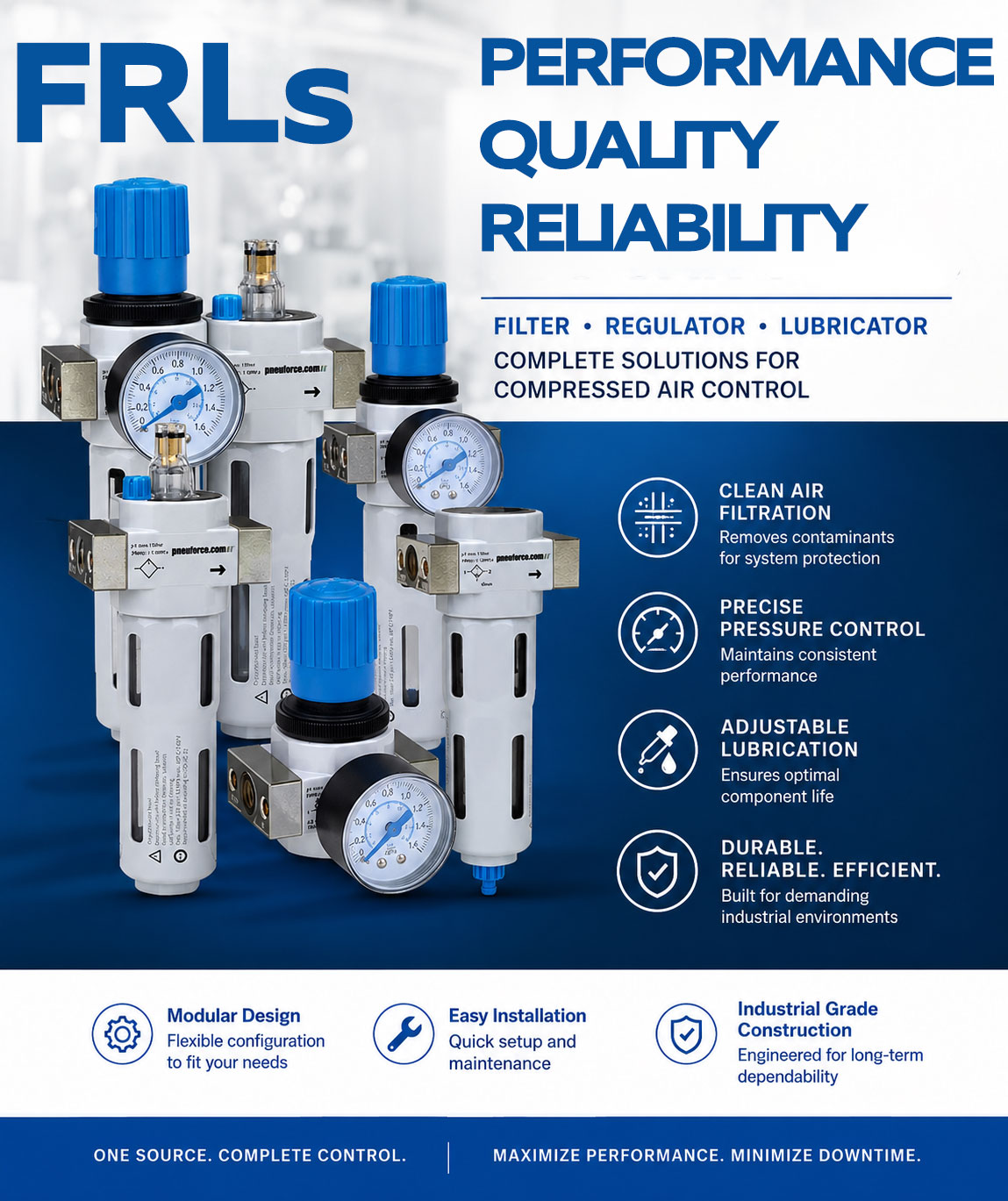
Compressed air filter, regulator and lubricator assemblies, commonly known as FRLs, are essential air preparation components used in pneumatic systems. An FRL helps deliver clean, controlled and properly conditioned compressed air to downstream pneumatic valves, cylinders, actuators, air tools and automation equipment.
The filter removes contamination such as dirt, rust, pipe scale, water droplets and debris from the compressed air supply. The regulator controls outlet pressure to the correct operating level. The lubricator adds a controlled oil mist when lubrication is required by the pneumatic components being used.
Pneuforce FRL assemblies are designed for industrial compressed air systems, machine builders, maintenance departments, packaging machinery, automation equipment, material handling systems and general pneumatic installations where reliable air preparation is required.
Download FRL Datasheet PDFWhat Does an FRL Do?
An FRL prepares compressed air before it reaches the pneumatic equipment. Clean and regulated compressed air helps protect valves, cylinders, seals and actuators from premature wear, contamination and inconsistent operation. Without proper air preparation, pneumatic systems may suffer from sticking valves, poor cylinder performance, seal damage, pressure fluctuation and increased maintenance.
Using the correct FRL can improve machine reliability, reduce downtime, extend component life and help maintain consistent pneumatic system performance.
How to Choose the Correct FRL
- Flow capacity: Choose an FRL that can handle the total air demand of the pneumatic system.
- Port size: Match the inlet and outlet ports to the pipework or tubing used in the machine.
- Filtration level: Select the correct micron rating based on the required air quality.
- Pressure range: Make sure the regulator can maintain the required working pressure.
- Lubrication requirement: Use a lubricator only when the downstream equipment requires air line lubrication.
- Maintenance access: Consider bowl removal, drain type and replacement filter element access.
Common FRL Applications
- Pneumatic cylinders and actuators
- Directional control valves
- Packaging machinery
- Assembly automation
- Robotic end-of-arm tooling
- Air tools and production equipment
- Material handling systems
- General factory compressed air systems
Why Air Preparation Matters
Compressed air often contains moisture, oil aerosols, dirt and pipe contamination. These contaminants can reduce the life of pneumatic equipment and cause inconsistent machine operation. Proper filtration, regulation and lubrication where required helps maintain stable performance and protects the investment in your pneumatic system.
Frequently Asked Questions
What is an FRL in a pneumatic system?
An FRL stands for Filter Regulator Lubricator. It prepares compressed air by removing contaminants, regulating pressure and providing lubrication where required.
Do I need a lubricator in my FRL assembly?
Not always. Many modern pneumatic valves and cylinders are designed for oil-free operation. Lubricators should only be used when specified by the equipment manufacturer.
What micron filter should I use?
Most industrial pneumatic systems use 5-micron or 40-micron filtration. Critical applications may require finer filtration depending on air quality requirements.
How do I choose the correct FRL size?
FRLs are selected based on flow rate, port size, operating pressure and total compressed air consumption within the pneumatic system.
Why is pressure regulation important?
Maintaining consistent pressure improves machine performance, reduces air consumption and helps protect downstream pneumatic components from excessive pressure.
Can one FRL supply multiple machines?
Yes. A properly sized FRL assembly can supply multiple pneumatic devices or machines provided the required flow capacity and pressure are available.
What is the difference between a filter regulator and an FRL?
A filter regulator combines air filtration and pressure regulation. An FRL adds a lubricator section when controlled air line lubrication is required.
How often should FRL filters be serviced?
Service intervals depend on air quality, operating hours and contamination levels. Filter elements should be inspected regularly and replaced when dirty or restricted.