











Pneumatic Control Valves for Industrial Automation
Pneumatic control valves are used to start, stop, direct and exhaust compressed air in industrial automation systems. They are commonly used to control pneumatic cylinders, actuators, grippers, blow-off circuits, vacuum generators and other air-operated equipment. Correct valve selection affects cycle speed, air consumption, machine reliability, flow capacity and overall system performance.
Pneuforce.com supplies pneumatic control valves for machine builders, maintenance teams, OEMs, packaging equipment, material handling systems, pick-and-place machinery and general factory automation. Use this category to compare valve functions, port sizes, voltages, flow ratings and actuator control options before purchasing online.
What Is a Pneumatic Control Valve?
A pneumatic control valve is an air valve that controls the direction, timing or release of compressed air within a pneumatic system. The valve determines where air flows, when pressure is applied and when air is exhausted from the circuit. In practical terms, this allows a machine to extend and retract cylinders, open and close grippers, index parts, operate clamps, activate blow-off nozzles or control vacuum generation.
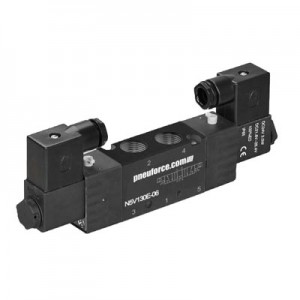
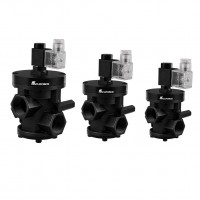
Pneumatic valves are available in several functions, including 3/2, 5/2 and 5/3 configurations. The correct valve depends on the actuator type, required motion, available air pressure, flow demand, electrical voltage and the level of control required by the machine.
How Does a Pneumatic Control Valve Work?
A pneumatic valve works by switching internal air passages between pressure ports, actuator ports and exhaust ports. When the valve is activated by a solenoid coil, air pilot signal, manual operator or mechanical actuator, the internal spool or poppet shifts position. This redirects compressed air to the required outlet while allowing the opposite side of the actuator to exhaust.
For example, a 5/2 valve used with a double-acting cylinder sends compressed air to one side of the cylinder to extend it, then switches air to the opposite side to retract it. Exhaust ports release the displaced air so the actuator can move quickly and reliably.
How to Choose the Correct Pneumatic Valve
- Valve function: Choose 3/2, 5/2 or 5/3 depending on whether you are controlling a single-acting cylinder, double-acting cylinder, actuator, gripper or air circuit.
- Port size: Match the valve port size to the air flow required by the actuator and the speed of operation.
- Flow rating: Check Cv or flow capacity when controlling larger cylinders or fast cycling machinery.
- Voltage: Confirm the solenoid voltage, such as 12VDC, 24VDC, 110VAC or 220VAC.
- Valve operation: Select solenoid, air pilot, manual or mechanical operation based on the control method.
- Mounting style: Decide whether the valve will be used inline, mounted on a manifold or installed directly on a machine panel.
- Environment: Consider temperature, contamination, washdown exposure, vibration and duty cycle.
Common Applications for Pneumatic Control Valves
Pneumatic Cylinders
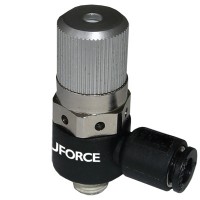
Pneumatic valves are commonly used to extend, retract and control the speed of single-acting and double-acting cylinders in automated machinery.
Pick-and-Place Systems
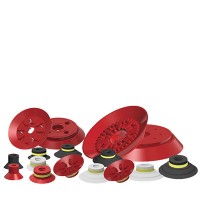
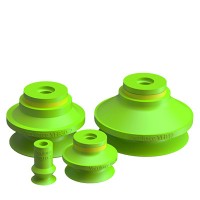
Control valves operate grippers, slides, vacuum generators, blow-off circuits and part transfer systems in robotic and automated handling applications.
Packaging Machinery
Packaging machines use pneumatic valves for carton handling, sealing, indexing, clamping, product transfer and repetitive high-speed motion.
Material Handling
Valves control air-powered actuators used in conveyors, diverters, lifts, stops, clamps and transfer stations.
Pneumatic Valve Types Available
This category includes solenoid valves, air pilot valves, manual valves, mechanical valves, directional control valves, manifold valves and related pneumatic valve components. Pneuforce.com offers control valve options for industrial compressed air systems where dependable operation, correct flow capacity and easy online ordering are important.
Frequently Asked Questions
What does a pneumatic control valve do?
A pneumatic control valve directs compressed air through a machine circuit. It can start, stop, reverse or exhaust air flow to control cylinders, actuators, grippers, vacuum generators and other pneumatic devices.
How do I choose the correct pneumatic valve?
Choose a pneumatic valve by checking the valve function, port size, flow rating, voltage, pressure range, actuator type and mounting style. The valve must provide enough air flow for the required cylinder speed and machine cycle time.
What is the difference between a 3/2 valve and a 5/2 valve?
A 3/2 valve has three ports and two positions and is commonly used for single-acting cylinders or air signals. A 5/2 valve has five ports and two positions and is commonly used for double-acting cylinders.
What is a 5/3 pneumatic valve?
A 5/3 pneumatic valve has five ports and three positions. It is often used where the actuator needs a center position, such as closed center, open center or pressure center control.
Can pneumatic valves be used with vacuum systems?
Some pneumatic valves can be used in vacuum circuits, but vacuum applications often require valves with suitable flow capacity, sealing and response characteristics. Pneuforce.com also supplies dedicated vacuum valves for vacuum automation systems.
What voltage pneumatic solenoid valve do I need?
The correct voltage depends on the machine control system. Common solenoid valve voltages include 12VDC, 24VDC, 110VAC and 220VAC. Always match the valve coil voltage to the machine control output.
Why is valve flow rating important?
Flow rating affects actuator speed and machine cycle time. If a valve is too small, the cylinder or actuator may move slowly or inconsistently. Larger cylinders and fast cycling equipment usually require higher-flow valves.
For detailed specifications and to explore our full range of valves, download our comprehensive  Pneuforce Valves Datasheet (this file will open in a new browser tab).
Upgrade your pneumatic systems with Pneuforce's state-of-the-art control and manual valves, and experience the benefits of enhanced performance, reliability, and efficiency.