








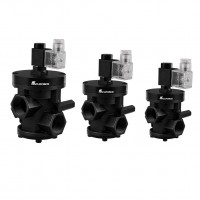






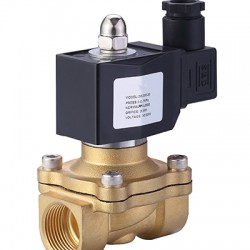
Brass Process Solenoid Valves for Water, Air and Industrial Fluids
Pneuforce brass process solenoid valves are electrically operated valves designed to automatically control the flow of water, compressed air, steam and compatible industrial fluids. These valves are commonly used in water treatment, HVAC equipment, irrigation systems, cooling circuits, industrial machinery and general process automation.
The Pneuforce N2W Series includes 2-way, normally closed solenoid valves manufactured with durable brass valve bodies. Available in port sizes from 3/8" NPT through 2" NPT, these valves provide dependable on-and-off flow control for machine builders, OEM equipment manufacturers and industrial maintenance applications.
 Download Brass Process Solenoid Valve Datasheet
N2W Series Brass Process Valve Range
2-Way Flow Control
One inlet and one outlet provide straightforward on-and-off control of liquids and gases.
Normally Closed Operation
The valve remains closed when electrical power is removed and opens when the solenoid coil is energized.
Brass Valve Body
Durable brass construction provides a practical balance of corrosion resistance, mechanical strength and value.
Multiple Port Sizes
Models are available with 3/8" NPT through 2" NPT connections for different flow and piping requirements.
Multiple Coil Voltages
AC and DC coil options allow integration with PLCs, relays, switches and industrial control systems.
Industrial Applications
Suitable for water systems, compressed air, HVAC equipment, irrigation and compatible process fluids.
What Is a Brass Process Solenoid Valve?
A brass process solenoid valve is an electrically actuated valve used to start or stop the flow of liquids or gases through a pipeline or industrial process. Electrical power energizes the solenoid coil, causing the internal valve mechanism to change position.
Process solenoid valves differ from pneumatic directional valves. Pneumatic directional valves generally route compressed air to cylinders and actuators, while process valves directly control the liquid or gas passing through the valve body.
Brass process valves are frequently selected for water, compressed air and utility-fluid applications because brass offers good corrosion resistance, mechanical durability and economical construction.
How Does a Normally Closed Solenoid Valve Work?
The Pneuforce N2W Series uses a normally closed operating configuration. This means the valve remains closed when electrical power is removed from the coil.
When the solenoid coil is energized, the magnetic field moves the internal plunger or pilot mechanism and opens the valve. Media can then flow from the inlet port to the outlet port.
When power is switched off, the spring-loaded internal mechanism returns the valve to its closed position. This provides a predictable default condition and automatically stops flow during a power interruption.
Direct-Acting and Pilot-Assisted Solenoid Valves
Direct-Acting Valves
A direct-acting solenoid valve uses the solenoid plunger to directly open or close the main flow path. These valves can typically operate without a minimum pressure differential, making them useful for low-pressure applications and smaller flow requirements.
Pilot-Assisted Valves
A pilot-assisted valve uses process pressure to help open the main diaphragm or piston. This design allows larger port sizes and greater flow capacity to be controlled with a compact solenoid coil.
Pilot-assisted valves normally require a minimum pressure differential between the inlet and outlet. The operating requirements for each valve should be confirmed using the technical datasheet.
Why Choose a Brass Valve Body?
Brass is one of the most widely used materials for general-purpose process solenoid valves. It combines good corrosion resistance, mechanical strength, accurate machinability and affordability.
- Cost-effective construction: Brass valves are typically more economical than stainless steel alternatives.
- Good corrosion resistance: Suitable for water, compressed air and many common industrial fluids.
- Mechanical durability: Brass provides the strength required for threaded valve bodies and industrial piping connections.
- Precise manufacturing: Brass can be machined accurately for reliable internal sealing.
- Broad application range: Suitable for HVAC, irrigation, water systems, machinery and utility control.
Key Benefits of Pneuforce Brass Process Solenoid Valves
Reliable Flow Control
Normally closed operation provides dependable electrical control of water, air and compatible process fluids.
Practical Brass Construction
Brass offers a strong balance of corrosion resistance, durability and economical pricing.
Broad Size Range
Port sizes from 3/8" NPT through 2" NPT support a variety of piping and flow requirements.
Automated Operation
The valves can be controlled using PLC outputs, relays, pressure switches, timers or manual electrical controls.
Fast Response
Electrical actuation allows rapid opening and closing for automated machinery and process systems.
Industrial Value
A cost-effective solution for OEM equipment, replacement valves and industrial machine building.
Brass vs Stainless Steel Solenoid Valves
Brass and stainless steel solenoid valves are both used throughout industrial process-control systems, but each material is suited to different operating conditions.
Choose Brass When:
- The media is water, compressed air or another compatible general-purpose fluid
- The surrounding environment is not highly corrosive
- Cost-effectiveness is an important consideration
- The application involves HVAC, irrigation, machinery or general utility control
- Aggressive washdown chemicals are not present
Choose Stainless Steel When:
- The application involves corrosive or aggressive media
- The valve will be exposed to washdown chemicals
- Food, beverage or pharmaceutical production is involved
- Outdoor corrosion resistance is especially important
- Greater cleanability or sanitary construction is required
Always verify compatibility between the valve body, internal seals and process media. Valve body material alone does not determine full media compatibility.
Valve selection: Confirm the process media, operating pressure, minimum pressure differential, flow requirement, port size, temperature, seal material, electrical voltage and desired fail-safe position before ordering.
Common Applications
How to Select the Correct Brass Solenoid Valve
- Media: Identify the liquid or gas that will pass through the valve.
- Port size: Match the NPT connection size to the piping or equipment.
- Pressure range: Confirm the minimum and maximum operating pressures.
- Pressure differential: Pilot-assisted valves may require a minimum inlet-to-outlet pressure difference.
- Temperature: Verify both media and ambient temperature limits.
- Flow capacity: Select a valve with adequate internal flow capacity for the application.
- Voltage: Match the solenoid coil voltage to the available electrical supply.
- Duty cycle: Confirm suitability for the intended frequency and duration of operation.
- Seal material: Verify compatibility with the media and operating temperature.
- Fail-safe position: Determine whether normally closed operation is appropriate for the process.
Port Size, Orifice Size and Flow Capacity
Port size identifies the threaded pipe connection on the valve body. Orifice size identifies the internal flow opening through the valve.
Port size and orifice size are not the same. Two valves with the same NPT port size may have different internal orifice sizes and different flow capacities.
Always review the technical flow data and internal orifice information for the selected model rather than choosing a valve based only on the threaded connection size.
Electrical Coil Selection
The solenoid coil must match the electrical supply used by the machine or control system. Depending on the model, AC and DC coil voltages may be available.
Using an incorrect voltage can prevent proper operation and may damage the coil. Always verify the voltage printed on the coil label before wiring the valve.
Solenoid coils naturally generate heat while energized. Ensure the ambient temperature remains within the coil rating and provide suitable clearance around the coil assembly.
Installation Guidelines
- Confirm the flow-direction arrow before installing the valve.
- Install the valve in the recommended orientation.
- Flush new piping before connecting the valve.
- Prevent pipe scale, metal chips and thread sealant from entering the valve.
- Apply suitable thread sealant sparingly.
- Do not allow excess sealant to extend into the flow passage.
- Support connected piping so the valve does not carry excessive mechanical load.
- Connect the correct electrical voltage.
- Install upstream filtration where contamination may be present.
- Follow all applicable machine-safety and electrical requirements.
Maintenance and Troubleshooting
Brass solenoid valves generally require minimal maintenance when installed with clean, compatible media. Regular inspection can help identify contamination, coil damage, leakage or abnormal operation before a complete failure occurs.
If a valve does not open, confirm the electrical supply, coil voltage, wiring and inlet pressure. For pilot-assisted models, verify that the required minimum pressure differential is available.
If a valve does not close completely, safely isolate the system and inspect for debris around the valve seat, diaphragm or pilot passages. Also verify the correct flow direction and media compatibility.
Why Choose Pneuforce Brass Process Solenoid Valves?
Pneuforce N2W Series brass process solenoid valves provide dependable automated control of water, compressed air and compatible industrial fluids.
Their normally closed operation, practical brass construction and broad range of port sizes make them suitable for machine building, OEM equipment, industrial maintenance and process-control applications.
Pneuforce supports customers with North American inventory and practical assistance with valve function, port size, flow requirements, electrical voltage and application compatibility.
Frequently Asked Questions
What is a brass process solenoid valve?
A brass process solenoid valve is an electrically operated valve used to automatically start or stop the flow of water, compressed air, steam or another compatible industrial fluid.
What does normally closed mean?
Normally closed means the valve remains closed when electrical power is removed. Energizing the coil opens the valve and allows media to flow.
What is a 2-way solenoid valve?
A 2-way solenoid valve has one inlet port and one outlet port. It is used to open or close a single media flow path.
What media can brass solenoid valves control?
Depending on the exact model and internal seal materials, brass valves may be suitable for water, compressed air, steam, light oils and other compatible industrial fluids.
Can brass process valves be used for water?
Yes. Water control is one of the most common applications for brass process solenoid valves. Verify pressure, temperature and water compatibility for the selected model.
Can these valves control compressed air?
Yes. Brass process valves can provide simple on-and-off compressed-air control where a 2-way shutoff valve is required.
Can every brass solenoid valve be used for steam?
No. Steam service requires a model specifically rated for the applicable temperature and pressure. Always verify the valve and seal ratings before installation.
What is the difference between direct-acting and pilot-assisted valves?
A direct-acting valve uses the solenoid to directly open the main flow path. A pilot-assisted valve uses process pressure to help open the main diaphragm and normally requires a minimum pressure differential.
What port sizes are available?
Pneuforce N2W Series brass process valves are available in port sizes from 3/8" NPT through 2" NPT, depending on the model.
Are port size and orifice size the same?
No. Port size refers to the threaded piping connection. Orifice size refers to the internal flow opening and directly affects the valve flow capacity.
How do I choose the correct valve size?
Select the valve using media type, pressure range, temperature, required flow, port size, internal orifice, pressure differential and application duty cycle.
How do I select the correct coil voltage?
Match the coil voltage exactly to the machine or control-system power supply. Confirm the voltage shown on the coil before connecting power.
Why is there a flow-direction arrow?
The internal valve mechanism is designed for media to flow in a specific direction. Installing the valve backward can cause poor operation or internal leakage.
Should a filter be installed before the valve?
Upstream filtration is recommended where dirt, pipe scale, metal chips or other contamination may be present. Clean media improves valve reliability and service life.
Why will a pilot-assisted valve not open?
Possible causes include incorrect voltage, damaged wiring, a failed coil, blocked pilot passages or insufficient pressure differential.
Why does the valve leak when closed?
Leakage may be caused by debris on the valve seat, damaged seals, incorrect flow direction, incompatible media or internal wear.
What is the difference between brass and stainless steel valves?
Brass valves are economical and suitable for many general-purpose water and air applications. Stainless steel valves provide greater corrosion resistance for washdown, chemical, food, beverage and pharmaceutical environments.
Can brass solenoid valves be installed outdoors?
They may be installed outdoors when the valve, coil and electrical connections are protected from weather, moisture, freezing and corrosive exposure. Stainless steel may be preferred for harsher environments.


Ships from Indianapolis, USA
Stock: 11
Ships from Indianapolis, USA
Stock: 12
Ships from Indianapolis, USA
Stock: 58
Ships from Indianapolis, USA
Please Call

Ships from Indianapolis, USA
Stock: 39
Ships from Indianapolis, USA
Stock: 52


Ships from Indianapolis, USA
Stock: 38

Ships from Indianapolis, USA
Stock: 39


Ships from Indianapolis, USA
Stock: 29

Ships from Indianapolis, USA
Stock: 20

Ships from Indianapolis, USA
Stock: 28

Ships from Indianapolis, USA
Stock: 16


Ships from Indianapolis, USA
Stock: 8

Ships from Indianapolis, USA
Please Call

Ships from Indianapolis, USA
Stock: 30
Ships from Indianapolis, USA
Stock: 28

Ships from Indianapolis, USA
Stock: 30
Ships from Indianapolis, USA
Stock: 14

Ships from Indianapolis, USA
Stock: 65
Ships from Indianapolis, USA
Stock: 21
Ships from Indianapolis, USA
Stock: 29
Ships from Indianapolis, USA
Stock: 29
Ships from Indianapolis, USA
Stock: 25
Ships from Indianapolis, USA
Stock: 47
Ships from Indianapolis, USA
Stock: 26
Ships from Indianapolis, USA
Stock: 22
Ships from Indianapolis, USA
Stock: 29
Ships from Indianapolis, USA
Stock: 29
Ships from Indianapolis, USA
Stock: 29
Ships from Indianapolis, USA
Stock: 29
Ships from Indianapolis, USA
Stock: 29
Ships from Indianapolis, USA
Stock: 29
Ships from Indianapolis, USA
Stock: 28
Ships from Indianapolis, USA
Please Call
Ships from Indianapolis, USA
Stock: 12