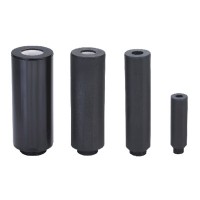
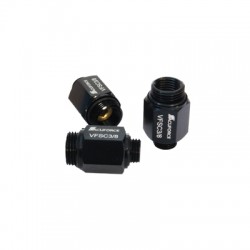
Self Closing Vacuum Valves
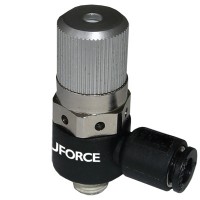
Self Closing Vacuum Valves are designed for industrial vacuum and pneumatic automation applications. The Vacuforce self-closing valve is an essential component for vacuum cup handling systems where multiple cups share the same vacuum source. This valve mounts directly onto the vacuum port of the vacuum cup, ensuring that if a cup is damaged or fails to seal against the load, the induced vacuum air flow closes the valve shut.
Vacuforce supports machine builders, integrators and maintenance teams with application-focused vacuum and pneumatic components for industrial automation.
Automatic ShutoffCloses uncovered vacuum points
Variable ProductsUseful when product size or position changes
Flow ConservationReduces leakage from unused zones
Gripper IntegrationDesigned for foam and multi-point vacuum tools
What Are Self Closing Vacuum Valves?
Self-closing vacuum valves are installed at individual suction points within a vacuum gripper. When a valve is not covered by the product, it closes automatically to limit vacuum loss. Covered valves remain active so the gripper can handle products that vary in size or position.
Key Features
- Automatically isolates uncovered vacuum points
- Helps maintain system vacuum on variable-size products
- Useful in foam and multi-zone vacuum grippers
- Reduces uncontrolled leakage compared with permanently open ports
- Passive operation without individual electrical control
Typical Applications
- Foam vacuum grippers
- Palletizing tooling
- Carton handling
- Panel handling
- Variable product sizes
- Multi-zone EOAT
Selection Guidance
Valve quantity and size should be matched to gripper area, vacuum flow and expected product coverage. The vacuum source must still provide sufficient flow during initial contact and for any leakage through active zones.
Application Tip: Final selection should be based on the actual product, machine cycle, operating environment and required pneumatic or vacuum performance. Confirm model-specific ratings before installation.
Self-Closing Valves vs. Open Orifices
Self-closing valves isolate uncovered zones automatically. Open orifices are simpler but continuously leak when they are not covered by the product.
Why Use This Product Family?
Self-closing vacuum valves are installed at individual suction points within a vacuum gripper. When a valve is not covered by the product, it closes automatically to limit vacuum loss. Covered valves remain active so the gripper can handle products that vary in size or position. Selecting the correct configuration can simplify machine integration, improve serviceability and provide more consistent application performance.
Frequently Asked Questions
What does a self-closing vacuum valve do?
It automatically closes a vacuum point when that area of the gripper is not covered by the product.
Why use them in a foam gripper?
They allow one gripper to handle products of different sizes while limiting leakage through uncovered areas.
Do the valves require electrical control?
No. They operate passively from local airflow and vacuum conditions.
Are all valves closed during gripping?
No. Covered valves remain active while uncovered valves close to reduce leakage.
How many valves are required?
That depends on gripper size, product range, vacuum source and desired zone spacing.
Do they eliminate all leakage?
No. They reduce leakage from uncovered points, but total system leakage also depends on seals, product porosity and active zones.